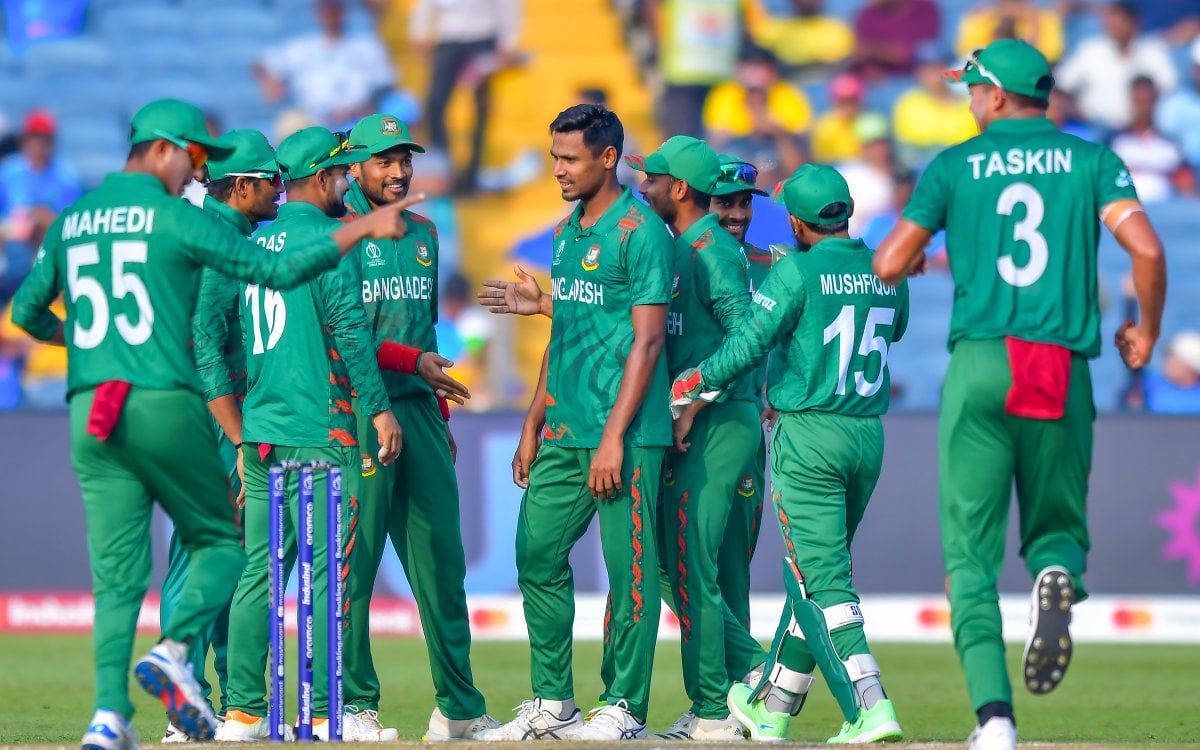
ICC Chief Executive Sanjog Gupta: Bangladesh Cricket Board (BCB) has escaped financial sanctions or suspension for its refusal to send its men’s cricket team to India to play the ICC Men’s T20 World Cup 2026, resulting in the International Cricket Council (ICC) replacing them with Scotland in the event, jointly hosted by India and Sri Lanka.The ICC decision not to impose financial sanctions on the Bangladesh Cricket Board (BCB) came after a tri-partite discussion also between the ICC, the Bangladesh Cricket Board (BCB), and the Pakistan Cricket Board (PCB) in Lahore on Sunday.
“It is agreed that no financial, sporting, or administrative penalty will be imposed on the Bangladesh Cricket Board in relation to the current matter. It is acknowledged that BCB retains the right to approach the Dispute Resolution Committee (DRC), should it choose to do so. This right exists under current ICC regulations and remains intact,” the ICC said in a statement on Monday.
According to the statement, ICC’s approach is guided by its principles of neutrality and fairness and reflects the shared objective of facilitative support rather than punishment.
However, many fans of the sport will consider the ICC’s approach as a climbdown from its stance when it decided to bring in Scotland into the T20 World Cup 2026 in place of Bangladesh, after seeking to move its matches from India to Sri Lanka at a late juncture.
“While reflecting on the Bangladesh cricket team’s unfortunate absence from the ICC Men’s T20 World Cup, the global governing body for cricket reaffirmed BCB’s position as a valued Full Member, with a proud cricketing history and a vital role in the growth of the global game. The ICC also reiterated its continued facilitation of growth in one of cricket’s most vibrant markets, with more than 200 million passionate fans to ensure that the national team’s non-participation in ICC Men’s T20 World Cup does not have any long-term effects on Cricket in the country,” the ICC said.
While many people will see this as a soft approach by the ICC and consider that the sport’s governing body has succumbed to the pressure from Pakistan and Bangladesh, the ICC defended it as a “forward-looking alignment reached in good faith”.
“The highlights of the dialogue reflect a forward-looking alignment reached in good faith and are intended to provide clarity on the current position of the stakeholders. They do not alter, qualify, or detract from the ICC’s constitutional autonomy, governance framework, or established decision-making processes, all of which remain fully applicable,” the ICC statement said.
The ICC has also allocated to Bangladesh the hosting rights of an ICC event between 2028 and 2031. This event is expected to be the ICC Men’s U19 World Cup 2028.
“As part of this understanding, an agreement has been reached that Bangladesh will host an ICC event prior to the ICC Men’s Cricket World Cup 2031, subject to the usual ICC hosting processes, timelines, and operational requirements.
“This reflects confidence in Bangladesh’s capability as a host and reinforces the ICC’s commitment to providing meaningful hosting opportunities across its membership to develop cricket in the country,” said the ICC statement.
The ICC also stated that all stakeholders have decided to remain committed to continued dialogue, cooperation, and constructive engagement in the best interests of the sport.
ICC Chief Executive Sanjog Gupta said: “Bangladesh’s absence from the ICC Men’s T20 World Cup is regrettable, but it does not alter the ICC’s enduring commitment to Bangladesh as a core cricketing nation. Our focus continues to be on working closely with key stakeholders, including BCB, to ensure the sport grows sustainably in the country and that future opportunities for its players and fans are strengthened. Bangladesh remains a priority cricket ecosystem deserving of long-term investment in its development, competitiveness, and global integration, and is not defined by short-term disruptions.”
Article Source: IANS