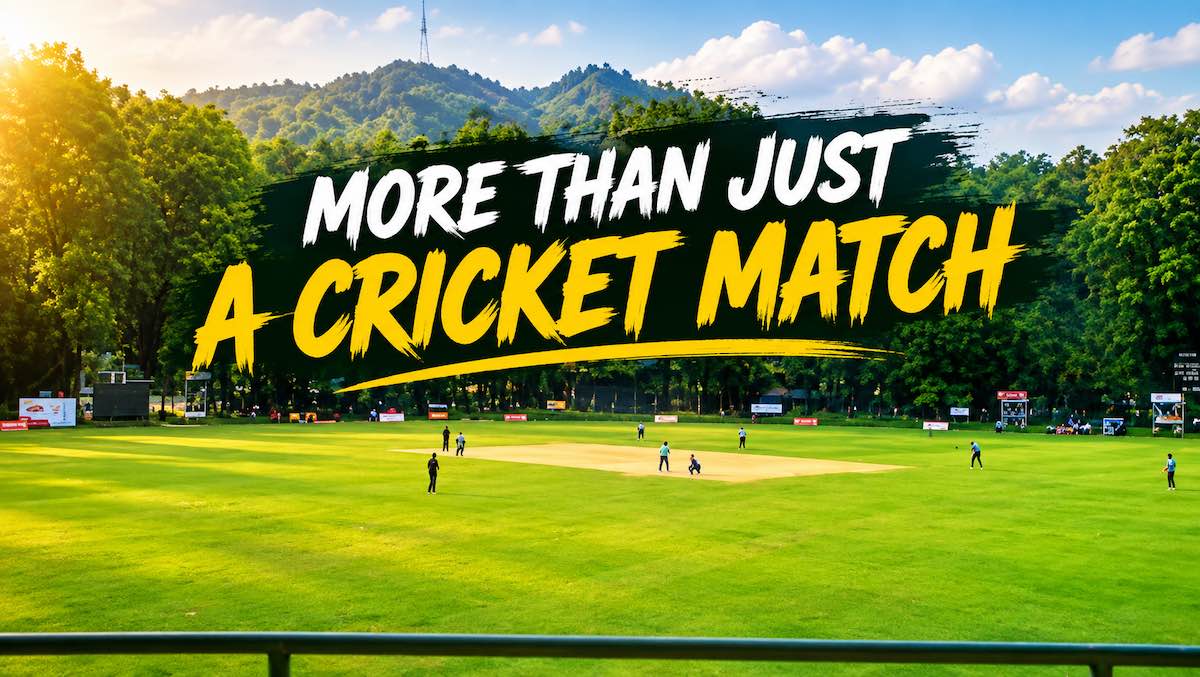
Srinagar could soon witness its biggest cricket event in nearly four decades. The Sher-i-Kashmir Stadium is expected to host the Irani Cup from October 1 to 5, with reigning Ranji Trophy champions Jammu and Kashmir taking on the Rest of India. If the venue is formally confirmed by the BCCI, it will be the most significant cricket match in Kashmir since India played Australia at the same ground on September 9, 1986.
For a place where cricket has a history far more complicated than the simple scorecard suggests, the proposed match carries unusual significance. The Sher-i-Kashmir Stadium has hosted only two ODIs. The first was on October 13, 1983, when the newly crowned World Cup champions India faced the West Indies. The second came nearly three years later, against Australia in 1986, when India lost by three wickets.
The 1983 match, however, became famous for reasons beyond cricket. The Indian team was booed by sections of the crowd, while the West Indies received strong support. The match was also disrupted when the pitch was dug up, forcing the game to be curtailed. The West Indies eventually won the rain-affected contest.
That episode left a lasting impression and was followed by a long absence of major cricket from the Valley.
The stadium itself also went through a difficult period. It was occupied by the Central Reserve Police Force (CRPF) for 18 years, during a period when Srinagar was affected by considerable militant violence. The CRPF eventually vacated the venue in 2007, after which the Jammu and Kashmir Cricket Association planned its renovation. First-class cricket resumed at the stadium in 2009, but regular major cricket did not return to the venue. Even the stadium witnessed political rallies, rather than cricket.
Four decades later, the circumstances are very different.
The proposed Irani Cup comes at a particularly important moment for Jammu and Kashmir cricket. The team has just achieved the biggest success in its history by winning the 2025-26 Ranji Trophy, defeating Karnataka in the final based on a first-innings lead.
The triumph was the culmination of years of gradual progress. Jammu and Kashmir had often shown flashes of potential but had remained on the fringes of Indian domestic cricket. The Ranji Trophy title changed that status dramatically.
The team’s success has also produced players capable of attracting national attention. Auqib Nabi Dar, the fast bowler from Baramulla, was the outstanding performer of the championship season, finishing with 60 wickets at an average of 12.56. He took 5 for 54 in the first innings of the final against Karnataka and has since been included in India’s Test squad.
For Jammu and Kashmir, the Irani Cup would be much more than another first-class fixture. It would bring the national domestic game to Srinagar at a time when the state team is at the summit of Indian cricket.
The Rest of India also gives the contest considerable stature. It is the most successful side in Irani Cup history, having won the competition 30 times, with Mumbai next on 15 titles.
Interestingly, cricket has already made a partial return to Srinagar. In 2024, Legends League Cricket staged matches at Bakshi Stadium, a football ground that was temporarily converted into a cricket venue. The tournament brought several well-known former international players to the Valley and gave a new generation of local spectators an opportunity to watch recognised cricket names in their own city.
But the Irani Cup would be different. It would be a major official domestic fixture involving the reigning Ranji Trophy champions, played at the historic Sher-i-Kashmir Stadium.
The transformation has been gradual rather than sudden. Jammu and Kashmir Cricket Association, formed in 1959-60, spent decades trying to establish itself in the national domestic structure. The team won its first Ranji Trophy match only in the 1982-83 season, more than two decades after gaining association status.
The Irani Cup match would allow a new generation of Kashmiri cricket followers to watch a major domestic contest in a historic venue. In 2026, the hope is that the focus can be where it belongs — on the players, the contest and the cricket.