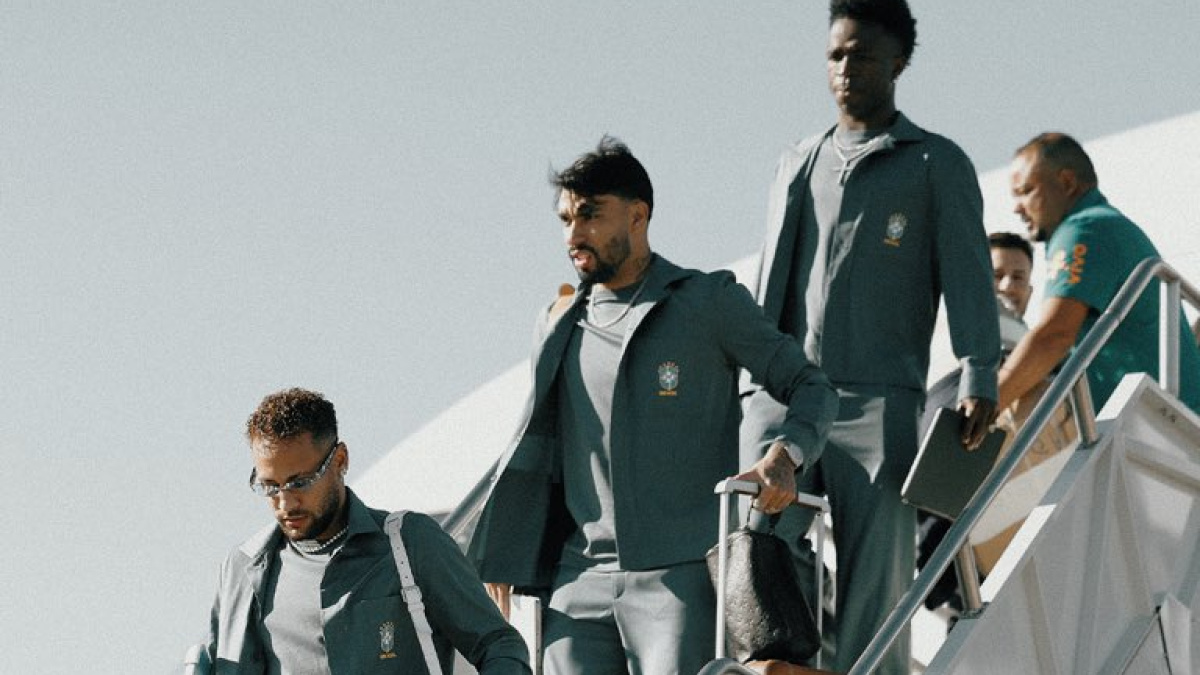
FIFA World Cup Group: Five-time champions Brazil headlines Group C as it seeks a sixth World Cup title, with Morocco aiming to build on its historic run in Qatar and Scotland and Haiti making long-awaited returns. The group will be played entirely in the United States, with Brazil carrying the weight of expectation and its three rivals looking to seize a rare opportunity on the global stage.
Brazil
Brazil enters the World Cup after an unconvincing qualifying campaign and a change of manager. The South American giant remains the most successful team in World Cup history, but its last title came in 2002, and recent tournaments have been marked by disappointment, reports Xinhua.
The team’s route to North America was unusually turbulent. Concern reached a tipping point following a 4-1 loss to Argentina in Buenos Aires in March 2025, which led to the dismissal of head coach Dorival Junior.
Carlo Ancelotti, who has won five UEFA Champions League trophies in a decorated managerial career at club level, was brought in to steady the situation and guide Brazil through qualification.
Results improved enough for Brazil to secure its place at the finals, although a fifth-place finish in South American qualifying underlined the scale of the challenge facing Ancelotti.
Since taking charge, Ancelotti has favored an attack-minded 4-2-4 system. The approach is designed to maximize the pace and skill available in the forward line, while asking the midfield pair to provide protection for the defense.
Injuries have complicated those plans. Absentees include Real Madrid forward Rodrygo, who was ruled out of the tournament with a knee injury, and Chelsea winger Estevao, who has a torn hamstring.
Questions over Neymar’s role dominated the buildup to squad selection. The 34-year-old has not represented his country since suffering a ruptured anterior cruciate ligament in October 2023. The former Barcelona and Paris Saint-Germain forward earned a place in the squad after showing encouraging form for Santos, but a calf injury has cast doubt over how much he will feature.
Brazil’s attacking options remain its greatest strength. The team showed in recent friendlies that it is likely to rely heavily on speed in transition and direct counterattacks. That strategy mirrors the approach Ancelotti used successfully at Real Madrid.
The country that once produced a seemingly endless stream of elite full-backs – Cafu, Roberto Carlos and Marcelo, just to name a few – no longer appears as secure in those positions. As a result, maintaining balance between attack and defense could be decisive.
Despite the doubts, Brazil arrives with the weight of history behind it and an expectation to compete for the ultimate prize.
Star player:
Vinicius Junior will carry much of Brazil’s attacking hopes. The Real Madrid forward has established himself among the world’s leading players at club level with his pace, vision and vastly improved finishing.
Yet with just nine goals in 48 international appearances, the former Flamengo prodigy has unfinished business in national team colors. If Brazil is to challenge for the title, Vinicius will be expected to provide the inspiration.
Player to watch:
Endrick may not begin the tournament as a regular starter, but the 19-year-old could become one of Brazil’s most influential players before it ends. The Real Madrid forward revived his fortunes after a loan move to Lyon in January with 16 goal contributions in 21 games for the French club.
With opponents likely to focus heavily on Vinicius and Brazil’s established stars, Endrick could emerge as an important alternative attacking threat.
Moroco
Morocco arrives with lofty expectations after becoming the first African team to reach a World Cup semifinal in Qatar.
Preparation for this tournament, though, has not been entirely smooth. Walid Regragui left his role as manager in March following a controversial end to Morocco’s Africa Cup of Nations campaign.
Mohamed Ouahbi has since taken charge. The former under-20 coach arrives with a strong reputation after leading Morocco’s youth side to a world title. His preferred system gives significant freedom to attack, particularly down the right flank.
The challenge will be helping his players deal with pressure to perform given the team is no longer considered an outsider.
Star player:
Achraf Hakimi remains the face of Moroccan football. The full-back has built an elite career with clubs including Real Madrid, Borussia Dortmund, Inter Milan and Paris Saint-Germain.
His success has made him one of the country’s most recognizable football figures. The 27-year-old’s ability to contribute at both ends of the pitch will be central to his team’s fortunes.
Player to watch:
Midfielder Neil El Aynaoui has quickly become an important part of Morocco’s plans. Strong in possession and effective at recovering the ball, he combines defensive discipline with attacking flair.
After establishing himself at Lens, he continued his development with Roma. The 24-year-old’s versatility and energy could prove vital if Morocco is to replicate its achievements from four years ago.
Haiti
The team:
Haiti’s return to the World Cup represents one of the tournament’s most remarkable stories. The Caribbean team will make its first appearance since 1974 after overcoming considerable obstacles during qualification.
Because of the country’s security crisis, Haiti was forced to play its qualifying matches away from home. It earned its ticket to football’s biggest stage with a 2-0 win over Nicaragua last November as it clinched top spot in its group.
Head coach Sebastien Migne has built a disciplined side that combines defensive organization with attacking intensity, making it a constant counterattacking threat.
The team enters the tournament as one of the lowest-ranked participants and will be considered an underdog in every group match. Even so, qualification alone has generated enormous pride.
Star player:
Duckens Nazon is the symbol of Haiti’s ambitions. The experienced striker finished among the leading scorers in qualifying and remains the team’s primary attacking threat. His influence extends beyond goals, providing leadership and belief within the squad.
For Haiti to challenge more established opponents, Nazon will need to deliver at the biggest moments.
Player to watch:
Ruben Providence could become one of the tournament’s surprise performers. The winger is known for his speed, direct dribbling and willingness to take on defenders. Having passed through the youth academies of Roma and Paris Saint-Germain, the 24-year-old possesses the technical quality that can unsettle any defense.
Scotland
The team:
Scotland returns to the World Cup for the first time since 1998 after securing qualification with a dramatic victory over Denmark.
Steve Clarke has transformed the team since taking charge in 2019. Under his leadership, Scotland has qualified regularly for major tournaments and restored belief among supporters after years of disappointment.
Recent results have been mixed, but the team retains a strong collective identity and a manager who commands respect from his players. Scotland has never progressed beyond the group stage at a World Cup, a statistic that should provide additional motivation.
Star player:
Scott McTominay has become the heartbeat of the Scotland side. The Napoli midfielder’s goal in the decisive win over Denmark secured a place in Scotland’s football folklore, while his growing influence at club level has elevated his standing even further. Scotland relies heavily on his ability to impact matches with his box-to-box dynamism.
Ben Gannon-Doak, 20, is regarded as one of Scotland’s brightest young talents. The Bournemouth winger’s pace and direct style offer a different dimension to the attack. Injuries have interrupted his progress, but his potential remains clear. If given opportunities on the World Cup stage, he could become one of the breakout players of the group.
Article Source: IANS