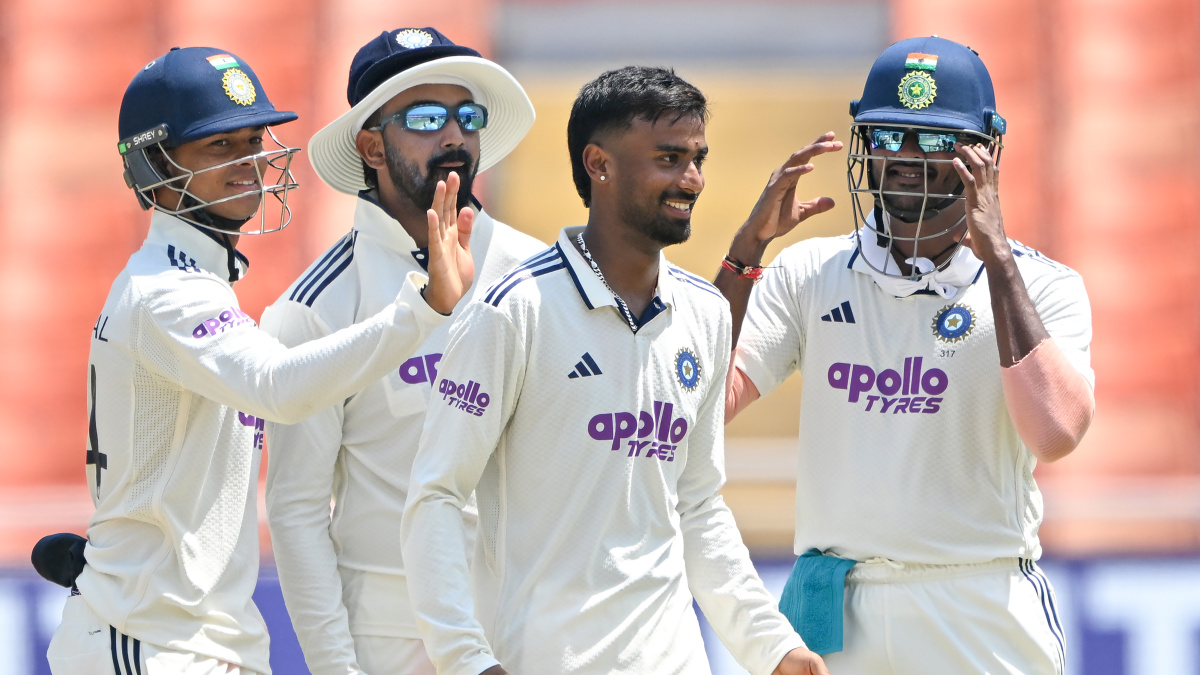
Debutant Manav Suthar: India captain Shubman Gill hailed his side’s all-round display against Afghanistan as a near-perfect performance, saying the team had ‘ticked all the boxes’ in a dominant victory that showcased both the depth of India’s bowling attack and the direction of a young side in transition.
Leading India in a match that saw his team pile up 564 for 8 declared before dismissing Afghanistan twice, Gill was particularly pleased with how every department contributed to the result.
“I think a complete win from us, ticked all the boxes. So very happy with that,” Gill said during the post-match presentation.
The victory also offered a glimpse into India’s future under a younger core of players. With several senior figures absent and a new generation taking on greater responsibility, Gill acknowledged that transitions often place added scrutiny on the batting unit.
However, he believes the team’s path forward is straightforward: build a batting group capable of consistently posting big first-innings totals while relying on a bowling attack he believes can win matches anywhere in the world.
“I’d say pretty simple. When you’re batting first innings, try to post 350 on the board every time you get into bat, no matter where we are playing, what kind of conditions it is,” Gill mentioned.
The confidence in India’s bowling resources, he said, provides the foundation for that philosophy. “I think there’s enough trust in our bowling group that we can take 20 wickets anywhere.”
One of the key decisions during the match came after India bowled Afghanistan out for 152. With a massive first-innings lead in hand, Gill and the team management had to decide whether to enforce the follow-on in challenging conditions.
The India captain revealed that the decision was influenced as much by his bowlers’ energy levels as by the state of the game. With temperatures soaring, the team had kept its options open before eventually asking Afghanistan to bat again.
“It was very hot. We decided that if we get them before lunch or just after the first drinks, we’ll see if the bowlers are fresh we’ll give them a follow-on. If not, we’ll bat a couple of sessions and maybe at the end of the day, we’ll give them the ball again,” Gill said.
India’s bowlers quickly convinced their captain they were ready for another spell. Mohammed Siraj struck early after the follow-on was enforced, while Prasidh Krishna provided crucial breakthroughs that ensured Afghanistan never recovered.
“But we got quick wickets, we came back. And also the way our fast bowlers bowled, Siraj got us that crucial wicket when we gave them a follow-on and Prasidh got three important wickets,” the skipper said.
While the fast bowlers played an important role, the match also highlighted the effectiveness of India’s spin attack. Debutant Manav Suthar claimed six wickets in the first innings, Washington Sundar finished with four wickets in the second innings and Kuldeep Yadav chipped in with three wickets as Afghanistan’s batting line-up struggled against the trio.
Gill said the talent within the spin group was never in question and stressed that experience would only make them more dangerous. “The kind of quality, I think, Manav, Washi and Kuldeep has, all three of them, there was never any doubt.”
According to Gill, the next step for the spinners is learning how to manage long spells and adapt their methods to different conditions as he said, “It’s all about getting the experience and getting a number of overs and seeing, on wickets like these how to set the batsman up, keep varying the pace, keep testing the batsman in different areas.”
Gill admitted that developing a young batting group remains a work in progress, but said the focus is on building clarity around the methods and standards required to succeed across conditions.
For Gill, the objective is not merely producing occasional big scores but establishing consistency that allows India to control matches from the outset as he concluded by saying, “How we can keep posting regularly 350-400 totals on the board (going forward).”
Article Source: IANS